Ask most men why they haven't seen their GP recently, and you'll get one of a handful of answers. Too busy. Don't want to make a fuss. Nothing serious enough. Waiting times are too long. It'll probably sort itself out. These answers sound different, but they tend to come from the same place: a deep-seated conviction that seeking help, especially for something as personal as your own body, is something you do only when you absolutely have to.
This isn't a Peterhead problem. It's a pattern seen across working-class communities throughout Scotland and the rest of the UK. Men are statistically far less likely than women to attend health screenings, to register with a GP when they move to a new area, and to seek help for mental health concerns. The consequences show up in the numbers: men are diagnosed later, treated later, and die earlier from conditions that are often preventable or manageable when caught in time.
In fishing communities, the barriers are compounded by the nature of the work itself. When you're away at sea for days or weeks at a time, booking and attending appointments becomes genuinely difficult. When your income depends on being physically present, taking time off for a health check feels like a luxury you can't afford. And when the culture around you prizes toughness and self-sufficiency — values that are genuinely useful out on the water — applying those same values to your health can become quietly dangerous.
"Men are diagnosed later, treated later, and die earlier from conditions that are often preventable or manageable when caught in time."
There's also the issue of how health services are typically delivered. A formal clinical environment, a receptionist, a waiting room, a doctor asking questions in a language that feels alien to the day-to-day — for men who've spent their working lives outside offices and institutions, this can feel alienating and uncomfortable in a way that's hard to articulate. It's not that they don't care about their health. It's that the system doesn't feel built for them.
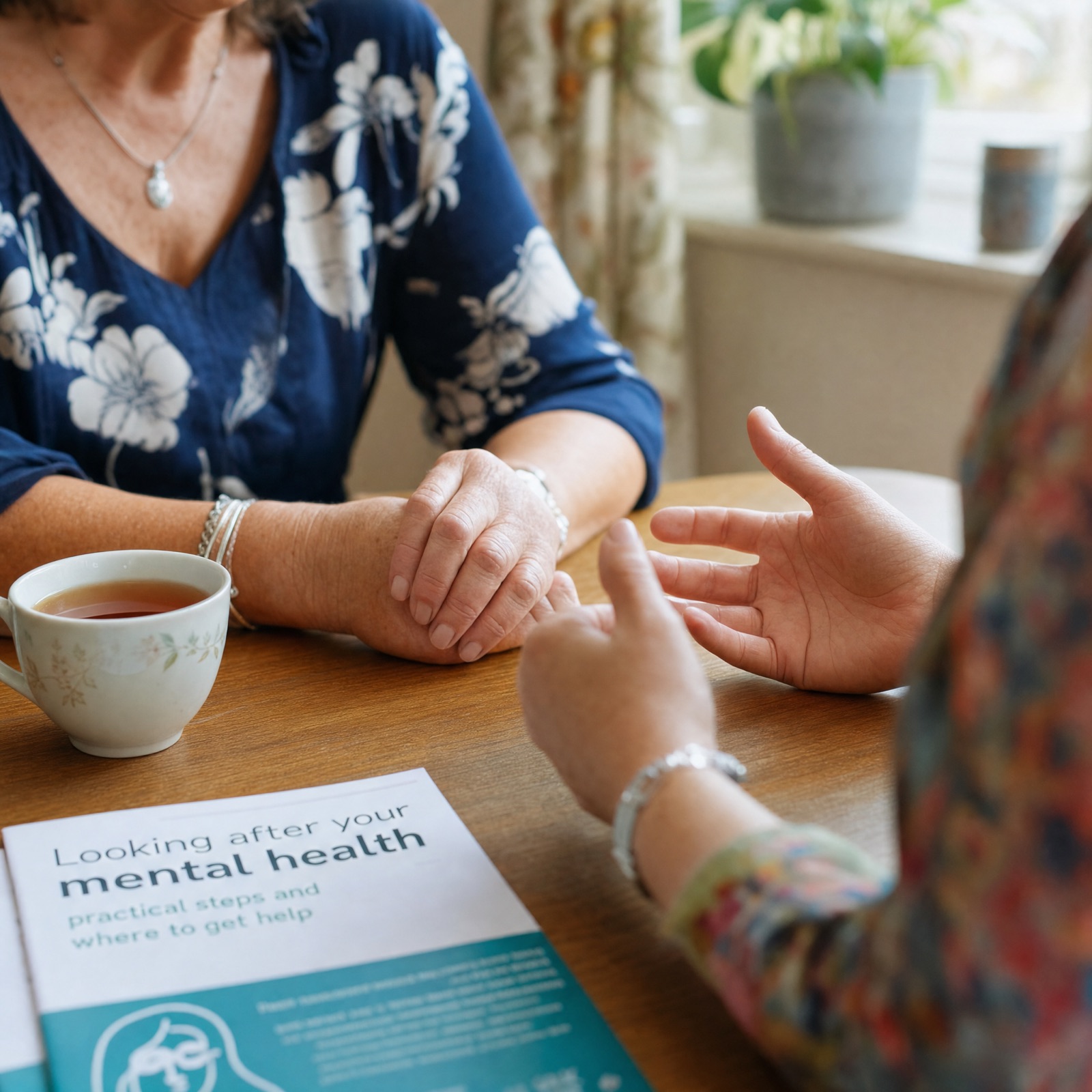
What works, as our work in Peterhead has shown, is meeting people on ground they feel confident on, and having those early conversations in a way that doesn't feel medical. Removing the formal setting removes a lot of the resistance. A conversation over a cup of tea on the dockside is categorically different from a consultation across a desk, even if the health information exchanged is the same.
Small practical steps help too. Reminding men that most GP appointments take under fifteen minutes. Helping them understand that a routine check-up is not an admission of weakness but a straightforward act of maintenance — the kind of sensible precaution they'd take with any piece of equipment they relied on. Explaining that early detection of high blood pressure, high cholesterol, or diabetes is not bad news; it's good news, because it means there's still time to act.
Cultural change takes time. But it starts with these individual moments of connection — a question asked, an answer given, a man who walks away knowing something about his health he didn't know before. That's where Vibrant Health Advocates – Apollo begins, and it's where every broader shift in men's health behaviour has to begin as well.
A real-life example
Read Davie's story — a Peterhead fisherman who almost walked past